


Executive Search Timeline: CEO vs CFO vs Director Roles
A CEO search that closes in sixteen weeks can still leave the seat empty for six months. What CEO, CFO and Director searches really take, and why notice decides it. Estimated Reading Time: 13 MinutesA CEO search that closes in sixteen weeks can still leave the seat empty for six months. Both numbers are accurate. Only the first one ever makes it into the board plan.
The executive search timeline by role is genuinely different for a CEO, a CFO and a Director, but the difference boards get wrong is not between the roles. It is between the day the offer is signed and the day the appointment starts producing. Ask three sponsors how long a search takes and you will get three honest answers measuring three different things: time to shortlist, time to signed acceptance, time to the first board meeting where the executive owns a number.
The distance between the first and the last of those is where value creation plans quietly slip.
This article sets out realistic timelines for CEO, CFO and Director appointments in the UK market, and shows why the longest stage in the process sits outside the search entirely.
Key Takeaways
- Measure time to impact, not time to offer. Notice periods, not search stages, create most of the gap between the two.
- CEO searches take longer because the addressable market is smaller and the decision has more owners, not because the process has more stages.
- Role sets the size of the market. Scale sets how many people have to approve the decision. An owner-led business without a board can appoint in eight to ten weeks, and the notice period shrinks with it.
- Director appointments compress the search and expand the risk. Speed is bought with a shallower market.
- The largest source of slippage is board availability, and it is the one variable entirely within the client’s control.
CEO, CFO and Director Search Timeline by Role
A UK retained executive search runs ten to twenty weeks from mandate sign off to signed acceptance, depending on seniority. CEO appointments sit at the top of that range, Director level at the bottom. Add the successful candidate’s notice period and the realistic time to their first day extends considerably further.
| Stage | CEO | CFO | Director level |
| Discovery and briefing | 1 to 2 weeks | 1 to 2 weeks | 1 week |
| Market mapping and engagement | 6 to 7 weeks | 4 to 5 weeks | 3 to 4 weeks |
| Assessment and shortlist preparation | 2 to 3 weeks | 2 to 3 weeks | 2 weeks |
| Client interview stages | 4 to 6 weeks | 3 to 4 weeks | 3 to 4 weeks |
| References and offer | 1 to 2 weeks | 1 to 2 weeks | 1 to 2 weeks |
| Sign off to signed acceptance | 16 to 20 weeks | 12 to 16 weeks | 10 to 14 weeks |
| Typical notice period | 6 months or more | 3 to 6 months | 3 months |
| Sign off to first day | 10 to 12 months | 6 to 10 months | 5 to 6 months |
Treat these as planning assumptions for businesses with formal board or investor governance, not as guarantees. The stages overlap, so the totals are shorter than the sum of the rows. A CEO appointment requiring formal board ratification or investor sign off will sit at the top of its range rather than beyond it.
Two features of the table matter more than the individual figures. The notice period line is longer than the entire search in every column. And the variance between roles comes almost entirely from the size of the credible candidate market rather than from process design.
Does Business Size Change the Executive Search Timeline?
Yes, materially. The figures above assume a Chair, an investor and a formal ratification step. In an owner-led business of £10m to £50m turnover, an executive appointment typically completes in eight to ten weeks from sign off to acceptance, and three-month notice periods are the norm. Sign off to first day is nearer five months than nine.
Role determines the size of the candidate market. Scale determines how many people the decision has to pass through. That second variable is where the time goes.
In a founder-owned business the shortlist is reviewed by the owner and perhaps one adviser. There is no investment committee, no independent director to schedule and no equity structure to negotiate line by line. Our own guidance to owner-managed clients has long been to aim for no more than six to eight weeks from agency shortlisting through two or three interview stages, testing and meeting the team. Where the owner blocks out the dates at the start, that target is met routinely
Three features of smaller businesses shorten the timeline further.
- Notice periods are shorter at the point of departure. Executives moving into a £20m business are more often coming from Director or Head of roles on three-month terms than from C-Suite roles on six.
- The package is simpler. Base, bonus and a car allowance can be agreed in a conversation. An equity scheme with leaver provisions cannot.
- The brief is owned by one person. Brief drift requires a committee to disagree with itself.
The trade-off is exposure. A short process with a single decision maker is fast because it removes the checks a board would insist on, not because the market is easier to search. The candidate pool for a first professional Managing Director in a family business is not larger than for a portfolio company CEO. It is often narrower, because the individual has to want the environment as well as the role. Where an owner-led business appoints in eight weeks, the saving should be reinvested in referencing and assessment, not banked.
Complexity moves a business up the table regardless of turnover. A £30m business trading in four countries, with external shareholders or working towards a sale, should plan on the mid-market column, not the SME one.
How Long Does a CEO Search Take?
A CEO search typically runs sixteen to twenty weeks from sign off to signed acceptance, with board ratification or investor sign off placing it at the upper end of that range. The additional time over other roles comes from a smaller addressable market, a longer approach cycle, and a decision involving the board, the investor and often the outgoing incumbent. The search work itself is rarely the constraint.
Three factors extend a CEO timeline in practice.
The market is narrow and passive. A credible CEO shortlist for a mid market portfolio company might be drawn from a longlist of forty to sixty genuinely relevant individuals nationally. Almost none of them are looking. Approach to first conversation regularly takes two to three weeks.
The decision has more owners. A CEO appointment involves the Chair, the investment team, sometimes an independent Non Executive Director, and increasingly a formal assessment provider. Every additional decision maker adds scheduling constraints rather than days of work.
Candidates negotiate for longer. Equity participation, leaver provisions and the value creation plan all have to be understood before a serious candidate resigns from a good job. Two weeks between verbal agreement and signature is normal at this level and is not a warning sign.
The compensating factor is that CEO candidates, once committed, are usually decisive. The long part of a CEO search is reaching the right forty people, not persuading the right one.
How Long Does a CFO Search Take?
CFO appointments generally complete in twelve to sixteen weeks from sign off to acceptance, sitting just below CEO level and well above Director. The finance market is deeper than the CEO market and better mapped, but PE experience, transaction exposure and sector familiarity narrow it quickly once a brief specifies more than one of them.
The pattern the market reports is consistent. A brief asking for functional competence alone fills quickly. A brief asking for a first time exit, a specific sector, a defined systems background and a location constraint reduces the credible population to a point where timelines behave like a CEO search rather than a functional one. Transaction experience is the scarce variable, and finance leaders who have taken a business through a sale or refinancing are contested by every sponsor with an exit inside eighteen months.
The practical consequence for a board is sequencing. Where a CFO appointment and a CEO appointment are both in prospect, the finance search will usually conclude first and start later, which is the opposite of the order most plans assume.
How Long Does a Director Search Take?
Director searches, covering Operations, Commercial, HR, Technology and General Management, typically complete in ten to fourteen weeks, with roles carrying board exposure sitting at the upper end. The candidate pool is materially larger, interview processes are shorter, and notice periods are usually three months. Speed comes from market depth rather than from a lighter process.
That depth cuts both ways. A wider pool makes shortlisting faster and raises the risk that the shortlist is competent rather than distinctive. The commercial question at Director level is not whether the search can be done in ten weeks but whether it reaches the individuals who would never have answered an advertisement.
Where Director appointments do run long, the cause is almost always one of the following:
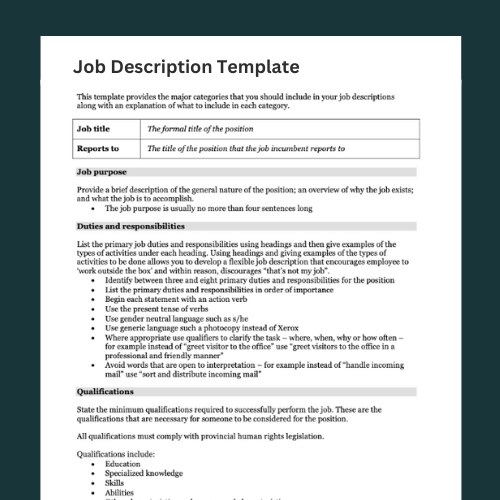
- The brief has been written as a job description rather than a mandate, so the shortlist is assessed against duties rather than outcomes
- The role sits between two levels, and the business has not decided whether it is buying a functional head or a future C-Suite successor
- The hiring manager is a newly appointed CEO or CFO still forming a view of what the team needs
The third is common in portfolio companies and worth planning for. Sequencing a Director search immediately behind a C-Suite appointment sounds efficient and frequently adds four weeks, because the brief changes once the new leader is in post.
Notice Periods and When Your New Executive Actually Starts
Notice is the longest stage in senior leadership recruitment and the only one the hiring business does not control. It is set by the candidate’s outgoing employer, and it routinely doubles the interval between commissioning a search and seeing any return on it.
Three things are worth knowing before an offer is made.
Notice is negotiable, but not by you. A candidate leaving on good terms with a successor in place is often released early. A candidate whose departure creates a hole rarely is, and the stronger the candidate, the more likely the second scenario.
Restrictive covenants may extend the effective delay. Non compete and non solicitation provisions can bite where the new employer operates in an overlapping market. Take employment law advice on enforceability before the start date is announced internally.
The arithmetic should run backwards, not forwards. Anchor the date to the transaction rather than the calendar. A CEO who must be in post at completion, with completion set for 1 October, needs two weeks of contingency at offer stage where equity and leaver terms are settled, six months of notice, and twenty weeks of search. The mandate has to be signed off in late October of the previous year. A sponsor who commissions the search when heads of terms are agreed in the spring is already five months late, and will meet the gap with an interim whether or not that was the plan.
That is the decision the arithmetic actually produces. Interim cover is a scheduled step rather than a concession, cheaper than a rushed permanent hire and considerably cheaper than a value creation plan running without a finance or operations lead.
General guidance on UK practice, not legal advice. Take specialist employment law advice on notice, garden leave or restrictive covenants in any specific appointment.
What Causes Delays in Executive Search?
Most delay is client side. Interview scheduling, unclear briefs, late changes to the specification and slow feedback account for the majority of overruns in a C-suite hiring timeline. Search side delay is real but bounded, and usually reflects a market narrower than either party assumed at briefing.
The recurring causes, in rough order of frequency:
- Panel availability. Four decision makers with full diaries can add two weeks between shortlist and first interview without a single decision being questioned
- Brief drift. The specification changes after the longlist is presented, which resets the search rather than refining it
- Slow feedback. Strong candidates read a ten day silence after a first interview as disinterest, and the best of them are usually in more than one process
- Deferred assessment decisions. Psychometric and leadership assessment commissioned at shortlist rather than at briefing adds one to two weeks at the point where time is most expensive
- Late referencing. Running references after offer rather than alongside final interviews removes the ability to act on what they reveal, as set out in our guide to executive reference checking and due diligence
None of these causes require a change of search partner to fix. They require the dates to be booked before the search begins.
Conclusion: What Boards Should Take From Timeline Planning
Appointment timing is a capital planning variable, and almost nobody treats it as one. It sits in the operational workstream, raised after the investment decision rather than inside it, which is why the gap between a signed offer and a productive executive keeps arriving as a surprise to people who model everything else to the week.
The value creation plan is dated from completion. The leadership gap it depends on closing is dated from a search that has not yet been commissioned. Those two dates are usually six months apart, and nobody notices until the executive appointed in March starts in September.
So the decision this article asks for is not about search process. It is about when the leadership conversation happens relative to the investment one. Appointment timing belongs in the deal model, alongside capex and working capital, not in the operational follow up afterwards. Sponsors who move it there stop discovering the constraint and start pricing it.
The date that matters is not the date the offer is signed. It is the date your executive first sits in a board meeting owning a number. If you cannot say what that date is for the next appointment on your plan, that is the gap worth closing this quarter, and it closes in a single conversation before any search begins. For the full sequence these timelines run through, from briefing to signed acceptance, see The Executive Search Process: What Determines Success.
Frequently Asked Questions
Ten to twenty weeks from mandate sign off to signed acceptance, depending on seniority, with CEO appointments at the top of the range and Director level at the bottom. The candidate’s notice period then adds three to six months or more, which is why time to first day is the more useful planning measure.
A shortlist can realistically be presented within six to twelve weeks of sign-off, depending on the role and the size of the business. A completed appointment in four weeks is a different proposition and usually means the market was not fully searched, or that a known candidate was already in view before the mandate started. An owner-led business with no board process is the one context where a completed appointment inside eight weeks is achievable without cutting the market search short. Where genuine four-week delivery is required, the honest answer is that the requirement points to a different kind of appointment.
Not by default, but the constraint changes. London and the South East offer depth, so timelines are driven by competition for the same candidates. Regional mandates have a smaller local pool, so the timeline depends on whether the brief allows relocation or a hybrid arrangement. A regional search that insists on existing local residence can take considerably longer than the same role in London.
Start from the date the executive must be in post, not the date the search begins, and use the upper end of the notice range rather than the average. If the resulting start date falls after the milestone the appointment is meant to support, the decision is not to compress the search. It is to commission interim cover as a planned step, and to move appointment timing into the deal model for the next transaction.
Not by itself. Time spent widening a genuinely narrow market improves the shortlist. Time lost to scheduling friction, unclear briefs or delayed feedback does the opposite, because strong candidates in parallel processes withdraw. The quality signal is where the time goes, not how much of it passes. A fourteen week search with three weeks of dead time is weaker than an eleven week search without any.





Related Posts

Executive Onboarding Support: What Happens After Placement?
The search concludes when the contract is signed. The appointment does not. Executive onboarding support covers everythi…

Executive Reference Checking: How Search Firms Handle Due Diligence
Ask a large UK corporate for a written reference on a departing executive, and you will most likely receive three lines:…

Executive Selection Process: Why Boards Lose the Right Candidate
Much of the groundwork, and with it much of the risk, in a senior appointment is settled well before the board sees a sh…

How Do Executive Search Firms Assess Candidates?
A confident interview and a strong CV tell you very little about how a leader will perform once the pressure o…

What Happens During the Executive Search Discovery Phase?
Most failed executive appointments can be traced to a decision made before a single candidate was approached. …

How Do Executive Recruiters Source and Attract Top Talent?
Every board knows the best executives are not on the market. The less comfortable point is that most hiring is still bui…